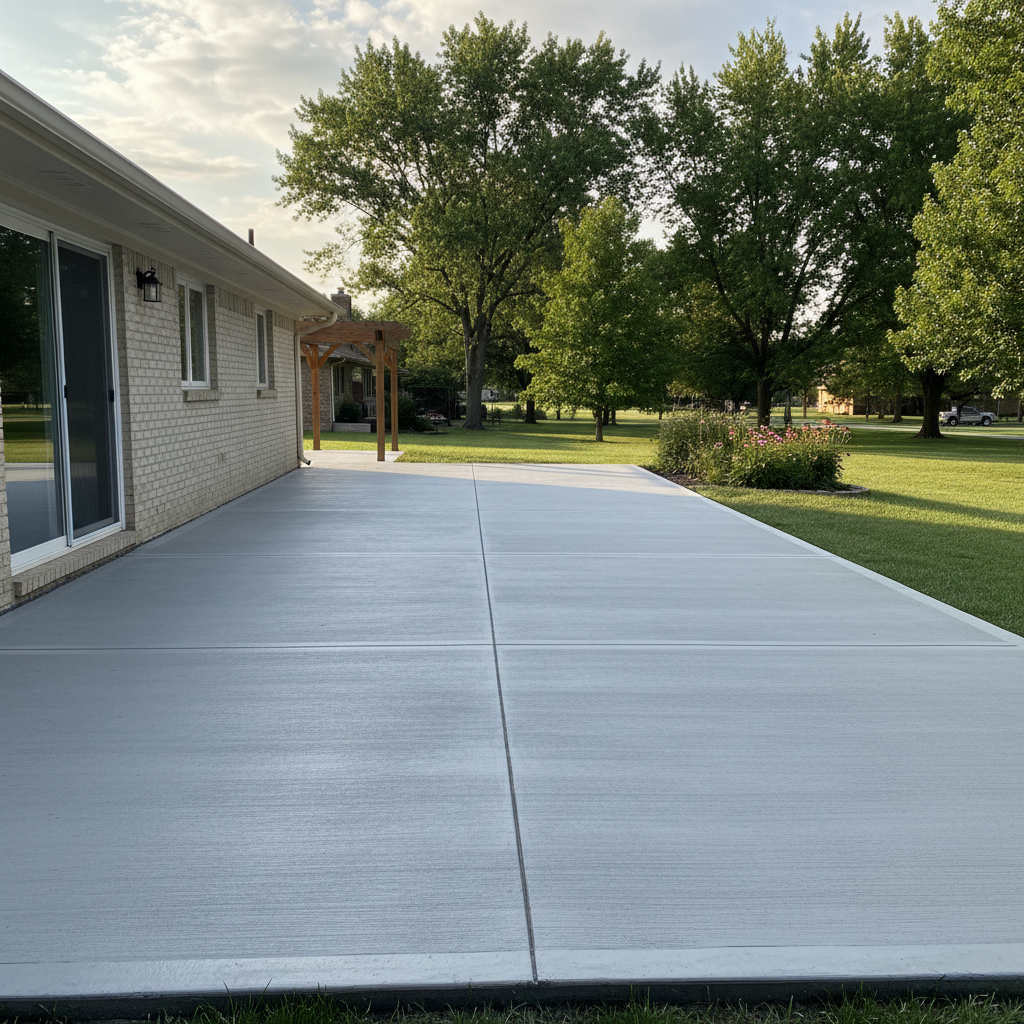
You've got a beautiful concrete patio, maybe you just had it poured, or maybe it's been there for years. Either way, you want it to last, right? Especially here in Lawrence, where our weather can be pretty tough on outdoor surfaces. Taking care of your concrete isn't rocket science, but it does take a little consistent effort. It's about protecting your investment and making sure you can enjoy that outdoor space for a long time.
Regular Maintenance: Your Patio's Best Friend
Think of your patio like your car; a little regular upkeep goes a long way. The biggest thing you can do is keep it clean. Dirt, leaves, pollen, even spilled food – they all break down over time and can stain or even etch your concrete if left too long. I recommend sweeping it off regularly, maybe once a week, especially after a storm or if you've had a lot of foot traffic.
For a deeper clean, a good rinse with a garden hose and a stiff-bristle brush works wonders. You can use a mild detergent, like dish soap, mixed with water for tougher spots. Just make sure to rinse it thoroughly afterwards so you don't leave any soapy residue. Power washing is an option, but be careful. Too much pressure can actually damage the surface, especially if it's an older patio or if the sealer is worn. If you do power wash, keep the nozzle moving and don't get too close to the surface. Stick to a lower PSI setting, around 1500-2000, and use a fan tip.
Another crucial step, especially for us in Kansas, is sealing. I can't stress this enough. Our freeze-thaw cycles are brutal. Water gets into those tiny pores in the concrete, freezes, expands, and then thaws, slowly breaking down the concrete from the inside out. A good quality penetrating sealer creates a barrier that repels water and protects against stains. You'll want to reapply sealer every 2-5 years, depending on the type of sealer, how much sun exposure your patio gets, and how much traffic it sees. You can tell it's time when water no longer beads up on the surface.
Extending Your Patio's Lifespan
Beyond cleaning and sealing, there are a few other things you can do to really extend the life of your concrete patio. First, be mindful of what you put on it. Avoid dragging heavy furniture directly across the surface; lift it if you can. If you have planters, make sure they have good drainage and consider putting them on stands to allow air circulation and prevent moisture from getting trapped underneath, which can lead to staining or even efflorescence (those white powdery deposits).
In winter, be careful with de-icing products. Many de-icers, especially those containing ammonium nitrates or sulfates, can severely damage concrete. Stick to sand for traction or products specifically labeled as concrete-safe. Even rock salt can be hard on concrete over time, so use it sparingly. Here in Lawrence, with our unpredictable winter weather, it's easy to get caught off guard, but a little prevention goes a long way.
Also, address any drainage issues around your patio. If water consistently pools against the edges, it can undermine the base, leading to cracks or settlement. Make sure your gutters are clean and directing water away from the patio.
Warning Signs You Shouldn't Ignore
Your patio will usually tell you when something's not right. You just need to know what to look for. Small hairline cracks, especially if they don't grow, are often just normal concrete behavior as it settles and cures. But if you see cracks that are:
- Widening rapidly
- Getting longer quickly
- Showing significant vertical displacement (one side is higher than the other)
- Forming a spiderweb pattern (crazing) over a large area, which can indicate surface weakness
These are signs of a bigger issue. Another thing to watch for is spalling, which is when the surface of the concrete starts flaking or popping off. This is often caused by those freeze-thaw cycles I mentioned, especially if the concrete wasn't properly sealed or if too much water was added during the finishing process. Pitting, which looks like small holes, can also be a sign of aggregate popping or surface degradation.
Discoloration that doesn't wash away, or a persistent white powdery residue (efflorescence) that keeps coming back after cleaning, could indicate moisture problems or mineral deposits. Don't just ignore these things; they usually get worse over time.
When to Call a Professional
Look, I'm all for DIY, but some jobs are best left to the pros. If you're seeing those serious cracks – the ones that are wide, long, or uneven – it's time to call someone like us at Spectrum Concrete Solutions. We can assess the underlying cause, which could be anything from soil settlement to tree roots, and recommend the right repair, whether it's crack injection, patching, or even slab jacking to lift settled sections. Trying to fix major structural cracks yourself can often lead to bigger problems down the road.
If you have widespread spalling or pitting, especially if it's making the surface uneven or unsafe, a professional can evaluate if resurfacing or a more extensive repair is needed. Sometimes, a simple patch won't cut it, and you might need a new overlay or even a full replacement if the damage is too severe. Don't wait until your patio is a tripping hazard or an eyesore. Getting an expert opinion early can save you a lot of headache and money in the long run.
We deal with Lawrence concrete every day, from the older homes in Old West Lawrence to the newer developments out west. We know what our local climate does to concrete, and we can help you keep your patio looking good and functioning safely for years to come.