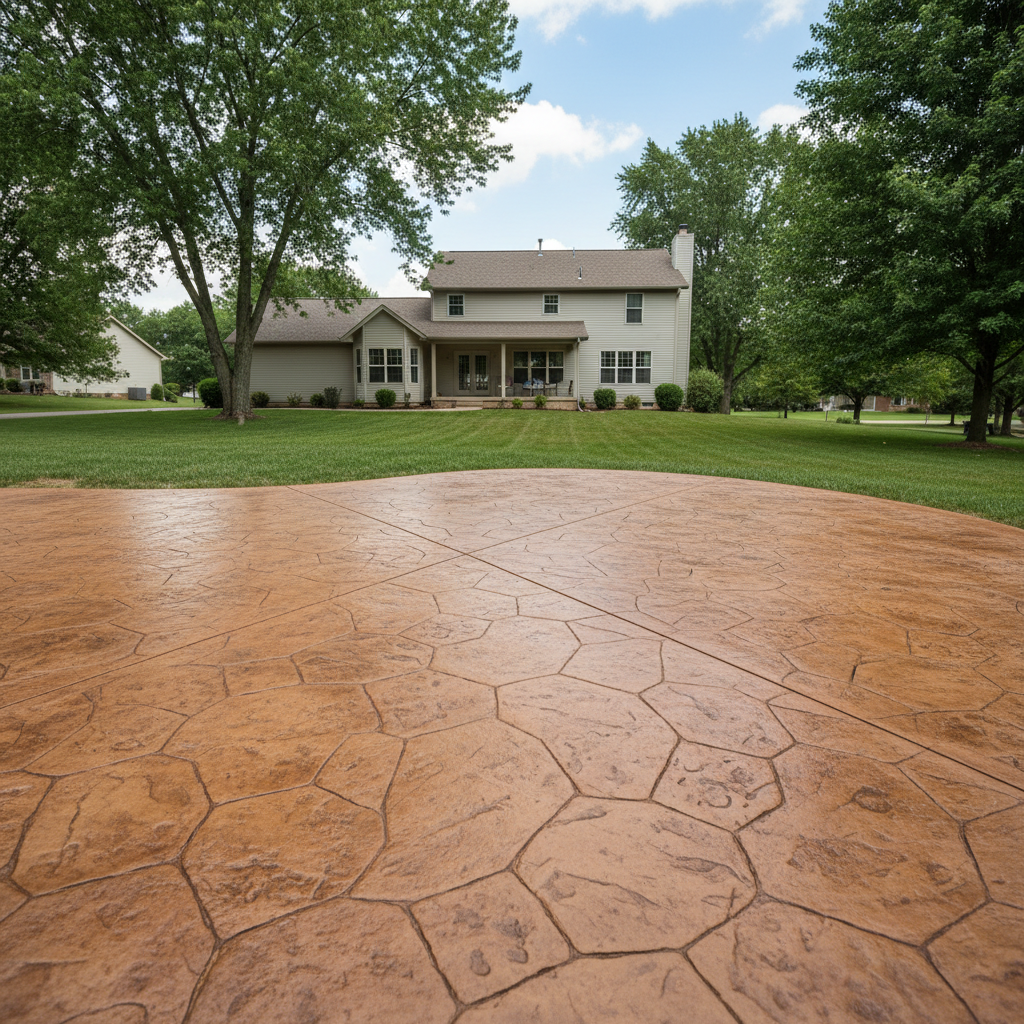
So, you've got some decorative concrete around your place – maybe a stamped patio, a stained walkway, or a polished garage floor. It looks fantastic, right? And you want it to stay that way. That's smart. Just like anything else you put money into for your home, decorative concrete needs a little attention to keep it looking and performing its best, especially with the kind of weather we get here in Lawrence.
Making Your Decorative Concrete Last Longer
The biggest thing you can do to make your decorative concrete last? Keep it sealed. Seriously. Think of sealant as sunscreen and a rain jacket for your concrete. It protects against UV rays, which can fade colors, and it also creates a barrier against moisture, oil, and other stains. Here in Kansas, we get brutal summers with intense sun, then winters that swing wildly between freezing rain, snow, and thaws. That freeze-thaw cycle is a real killer for concrete if it's not protected right, letting water seep in, expand, and crack things.
How often should you reseal? Well, it really depends on the type of sealant and how much foot (or car) traffic the area gets. For outdoor spots like patios or driveways, I usually tell people every 2-3 years. If it's a high-traffic commercial area, maybe even every year. For indoor decorative concrete, say a basement floor, you might get 5-10 years out of a good sealant job. You'll know it's time when water stops beading up on the surface and starts soaking in. Don't wait until it looks dull or worn; be proactive, okay?
Regular Upkeep: It's Simpler Than You Think
You don't need some fancy routine to keep your decorative concrete in tip-top shape. Most of it is just common sense and a little elbow grease.
- Clean it regularly: For outdoor surfaces, a good sweep and a rinse with a garden hose usually does the trick. For tougher dirt, use a mild detergent (like dish soap) and a soft-bristle brush. Avoid harsh chemicals or pressure washers on full blast; they can damage the sealant or even the concrete itself.
- Clean up spills quickly: Oil, grease, paint, or anything acidic should be cleaned up as soon as possible. The longer they sit, the more likely they are to stain, even with a good sealant.
- Protect from heavy objects: If you're moving heavy furniture or equipment, use pads or dollies to avoid scratching or gouging the surface.
- Winter care: This is super important for us. Avoid using rock salt or de-icers that contain ammonium nitrates or sulfates. These can really damage concrete, especially decorative finishes. I always tell folks to stick to sand for traction or de-icers specifically labeled as concrete-safe. Shovel snow promptly to prevent prolonged moisture exposure.
Honestly, a little consistent cleaning goes a long way. It's like washing your car; you do it to keep it looking good and prevent long-term issues.
Warning Signs of Trouble
You've got eyes, so use 'em. Walk around your decorative concrete now and then and look for anything that seems off. Catching problems early can save you a lot of headache and money down the road.
- Fading color: If your colored or stained concrete is starting to look dull or patchy, especially in sunny spots, that's a big sign your sealant is failing and UV rays are doing their damage.
- Flaking or peeling sealant: This is pretty obvious. If the top layer is coming off, it's not protecting anything anymore.
- Cracks: Small hairline cracks can sometimes be normal, especially with our expansive clay soils around here, but if they're growing, widening, or you see new ones appearing rapidly, that's a concern.
- Pitting or spalling: This looks like small chunks of concrete are popping out of the surface. It's often a sign of water damage, especially from freeze-thaw cycles, or sometimes from improper finishing.
- Stains that won't come out: If you're cleaning regularly and still getting stubborn stains, your sealant is likely compromised.
When to Call a Professional
Look, I'm a contractor, so you know I'm going to say this, but it's true: some jobs are just beyond DIY. If you're seeing any of those major warning signs – significant cracking, widespread spalling, or extensive fading – it's time to call someone like us at Spectrum Concrete Solutions. Don't try to patch over serious issues yourself; you could make it worse or just delay the inevitable. We can assess the damage, figure out the root cause, and recommend the right repair or restoration. Sometimes it's a simple fix, other times it might need more extensive work, but getting a professional opinion early is always your best bet. We want your decorative concrete to last as long as possible, and sometimes that means bringing in the experts.
Taking care of your decorative concrete isn't rocket science, but it does require a little attention. Keep it clean, keep it sealed, and keep an eye out for trouble. Do that, and you'll enjoy its beauty for years to come.