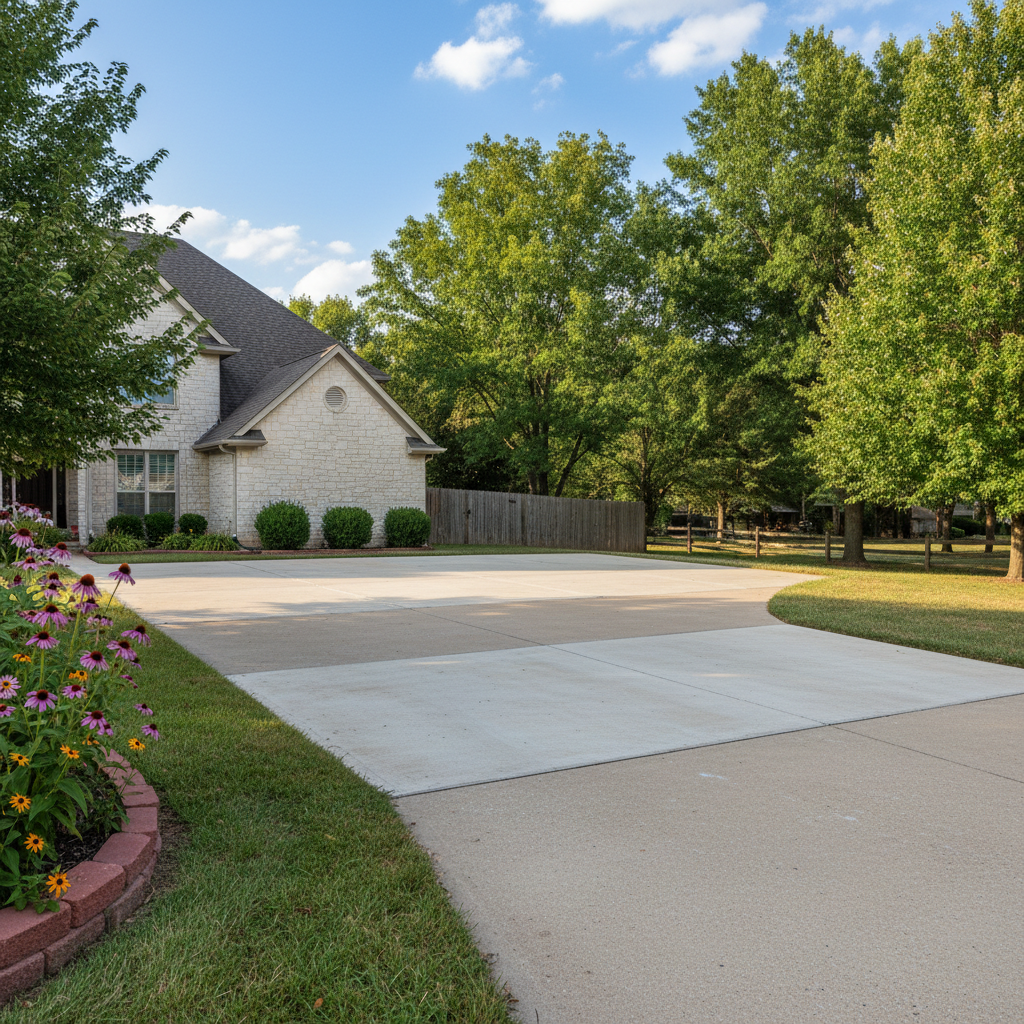
So, you've had some concrete work done around your place in Lawrence. Maybe it was a cracked driveway section, a sinking patio slab, or some spalled steps. Whatever the fix, you want it to last, right? Nobody wants to pay for the same repair twice, especially not with our wild Kansas weather putting everything to the test. Let's talk about how to keep that repair looking good and doing its job for years to come.
Extending the Life of Your Concrete Repair
The biggest thing you can do to extend the life of any concrete repair is to protect it from water and temperature swings. Here in Lawrence, we see it all: scorching summers, freezing winters, and plenty of rain and snowmelt in between. Those freeze-thaw cycles are brutal on concrete, even new stuff.
- Seal it up: This is probably the most important step. Once your repair has fully cured (your contractor should tell you how long, but usually 28 days for full strength), apply a good quality concrete sealer. I'm talking about a penetrating sealer, not just a topical one that sits on the surface. It'll soak into the concrete, making it less porous and much more resistant to water absorption, de-icing salts, and even oil stains. You'll want to reapply this every 2-5 years, depending on the product and how much traffic the area gets.
- Proper drainage: Make sure water isn't pooling on or near the repaired area. If your downspouts are dumping water right next to a repaired foundation or patio, that's a recipe for disaster. Extend those downspouts, or consider some simple grading to direct water away.
- Avoid harsh chemicals: When winter hits, try to avoid using rock salt or de-icing chemicals directly on your concrete, especially new repairs. These can accelerate surface damage. Sand for traction is a much safer bet. If you absolutely have to use something, look for products labeled 'concrete-safe' or 'pet-friendly' – they often use different, less aggressive compounds.
Regular Maintenance: What You Should Be Doing
Maintenance for concrete repair isn't rocket science, but it does require a little attention. Think of it like changing the oil in your car – small efforts now prevent big problems later.
- Keep it clean: Sweep off dirt, leaves, and debris regularly. Organic matter can hold moisture against the concrete, and grit can act like sandpaper underfoot, slowly wearing down the surface. A good power wash once a year (on a low setting, not blasting directly at joints or cracks) can also help keep it looking fresh.
- Address stains quickly: Oil, grease, rust, or even spilled drinks can penetrate unsealed concrete. The quicker you clean them up, the less likely they are to set in. There are specific concrete cleaners for different types of stains; just make sure to follow the directions carefully.
- Check expansion joints: Those little gaps between concrete slabs aren't just for show; they allow the concrete to expand and contract without cracking. Make sure they're free of debris and that any filler material (like caulk or backer rod) is intact. If it's cracking or missing, you can usually replace it yourself with a good quality exterior caulk designed for concrete.
Warning Signs of Trouble
You're not a concrete expert, and you don't need to be. But you can definitely learn to spot the early signs that something might be going wrong with your repair. Catching these early can save you a lot of headache and money.
- New cracks forming: A small hairline crack might not be a huge deal, but if you see new, wider cracks developing, especially radiating from the repaired area, that's a red flag.
- Spalling or flaking: This is when small pieces of the concrete surface start to chip, peel, or flake off. It often looks like the top layer is deteriorating. This is usually a sign of water penetration and freeze-thaw damage.
- Sinking or settling: If a repaired slab starts to sink or become uneven with the surrounding concrete, that indicates a problem with the base material underneath. This is pretty common in areas of Lawrence with older homes where the soil might have shifted over decades.
- Discoloration or efflorescence: While some discoloration is normal over time, significant, persistent white powdery residue (efflorescence) can indicate moisture moving through the concrete.
- Water pooling: If water consistently sits on the repaired area for hours after rain, your drainage isn't working right, or the concrete itself has settled.
When to Call a Professional
Look, I'm all for DIY, but some things are best left to the pros. If you see any of those warning signs, or if you're just not sure, it's always better to get an expert opinion. Don't wait until a small problem becomes a major structural issue.
You should definitely call someone like us at Spectrum Concrete Solutions if:
- You see significant new cracking that's getting wider or longer.
- There's noticeable sinking or unevenness in the repaired area.
- You're experiencing extensive spalling or surface deterioration.
- Water is consistently pooling and you can't figure out why or how to fix the drainage.
- You suspect there might be a problem with the sub-base or foundation.
A professional can assess the situation, figure out the root cause, and recommend the right solution, whether it's more extensive repair, mudjacking, or something else. Sometimes, what looks like a big problem might be a relatively simple fix if caught early. Don't let a small crack turn into a big headache because you waited too long.
```