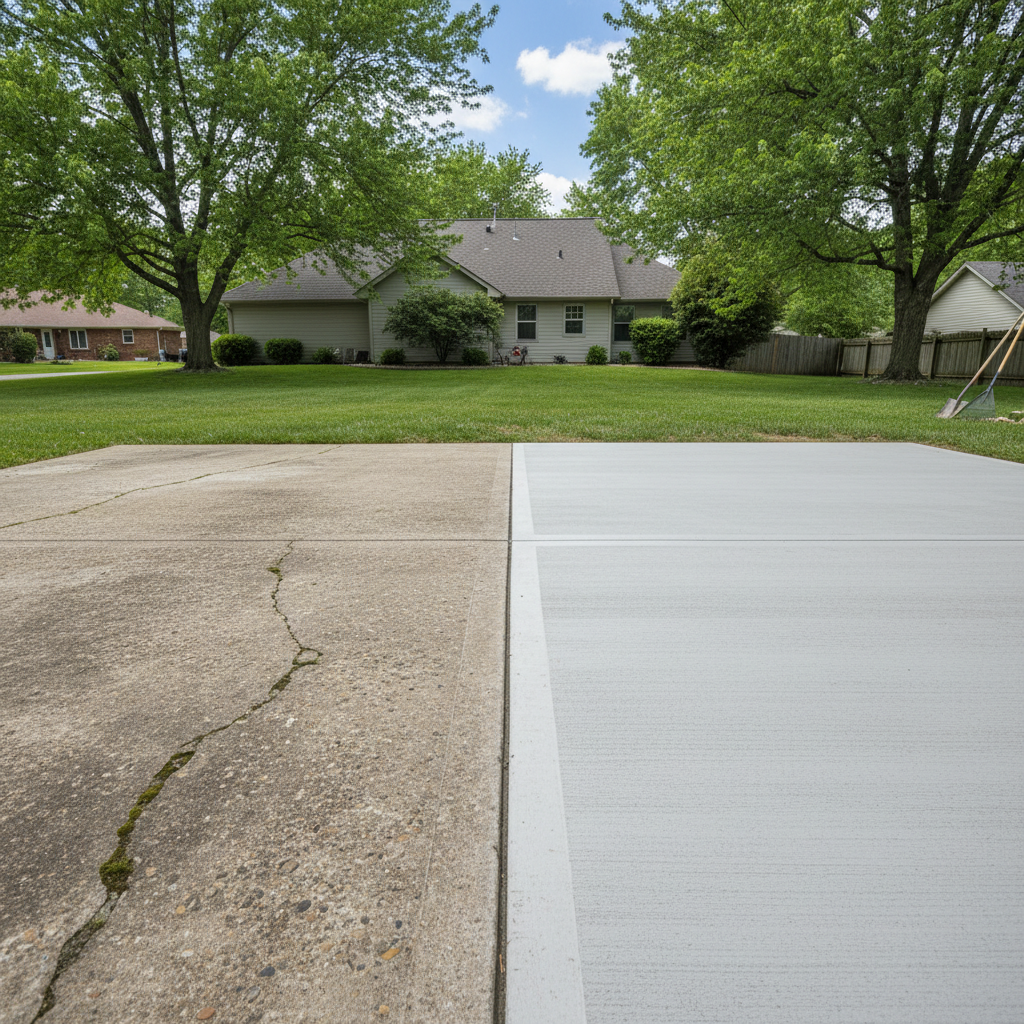
Deciding what to put down for your new patio or driveway usually boils down to two main contenders: traditional poured concrete flatwork or interlocking pavers. If you live around old-school neighborhoods like Old West Lawrence, you have seen plenty of both. Spectrum Concrete Solutions has pulled up enough failing patios and laid down enough fresh truckloads to tell you straight up that neither option is magic, but one definitely holds up better against our local climate.
Let us talk about how these two materials handle the ground we have got here. Lawrence sits on some stubborn clay soil that swells when it is wet and shrinks into concrete blocks during a dry Kansas August. That constant movement is brutal on any hardscape. Poured concrete acts as a single large slab. If the subgrade is not prepped right, that slab is going to crack. Pavers, on the other hand, are individual units sitting on a bed of crushed rock and sand. They shift independently, which means minor ground movement usually just flexes the joints rather than snapping a surface in half.
Cost is usually the first thing homeowners bring up when we chat on-site. Poured concrete flatwork generally wins the initial price battle. You are paying for materials, a crew for a day, and finishing work. Pavers take a lot more manual labor to lay down piece by piece, driving up the installation cost significantly. But you have to look at the long game. If a poured slab cracks badly ten years down the road because of our freeze-thaw cycles, fixing it usually means tearing out a massive chunk. If a paver sinks because of a mole tunnel or poor drainage, you can literally pop it out, add some base material, and drop it right back in.
Maintenance is another battleground. Concrete is simple to clean, but once it stains from oil or leaves, getting it back to square one takes some serious pressure washing and sealing. Pavers do not stain quite the same way, but those joints between them love to grow crabgrass and dandelions. If you dislike spending your Saturday afternoons on your hands and knees with a weed wand, standard concrete flatwork is going to make you much happier.
When it comes to looks, pavers offer an unmatched variety of shapes, colors, and textures right out of the gate. Standard gray concrete can look a bit utility-grade, though mixing in a broom finish or basic color tint changes the appearance entirely. Spectrum Concrete Solutions does a lot of traditional flatwork because most homeowners want a clean, low-maintenance surface that will not empty their wallets.
If you want a reliable recommendation for typical Lawrence conditions, go with properly reinforced poured concrete flatwork if you value low long-term maintenance and a solid surface for patio furniture. Just make sure whoever lays it down does not skimp on the gravel base or control joints. If you have a heavily sloped yard that moves a lot or you are set on a specific rustic look, the flexibility of pavers might be worth the extra upfront cash.