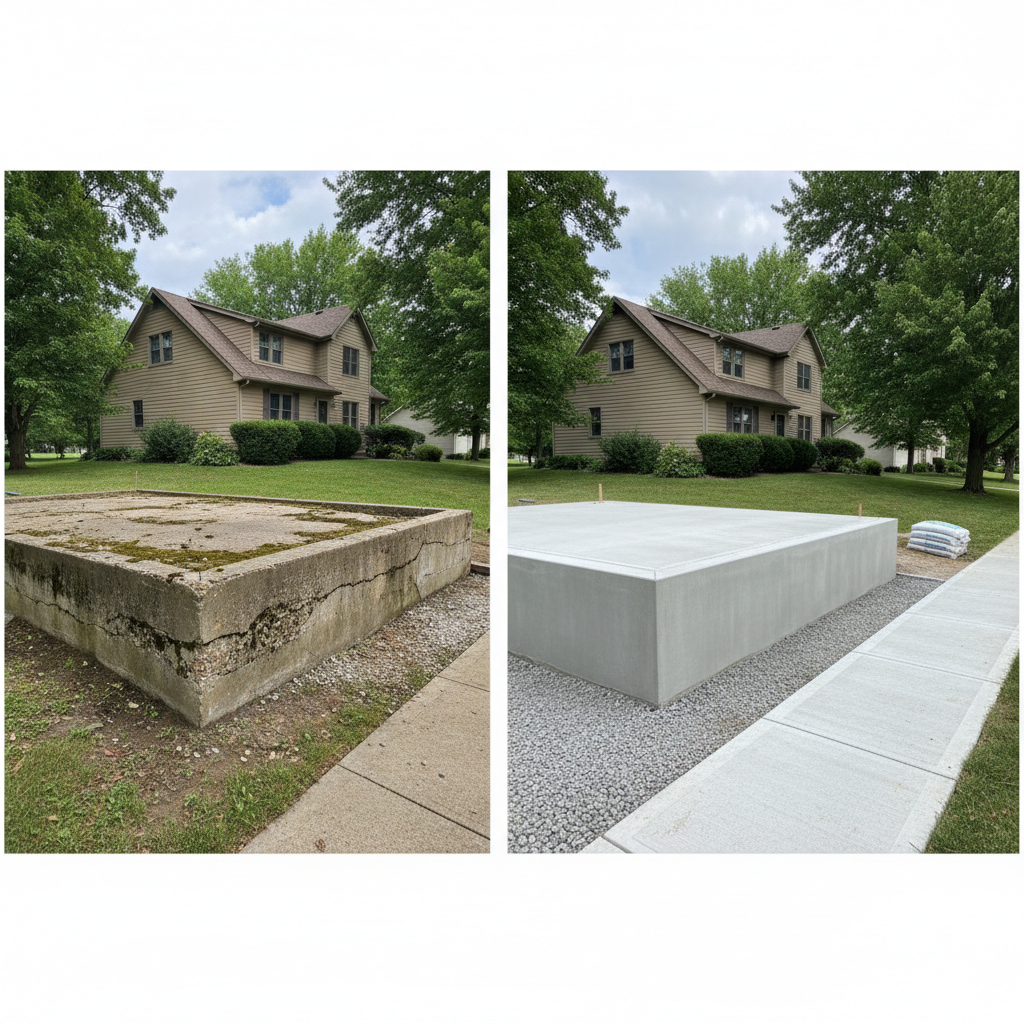
Alright, let's talk foundations. If you're building a new home here in Lawrence, or even adding a big extension, one of the first big decisions you'll face is what kind of foundation to put under it. Most folks are looking at two main options: a concrete slab-on-grade foundation or a full basement foundation. Both have their place, but they're definitely not created equal, especially when you consider our local conditions.
Slab-on-Grade Foundations: The Basics
A slab-on-grade foundation is pretty much what it sounds like: a single layer of concrete, several inches thick, poured directly on the ground. Before the pour, we prepare the site by leveling the soil, laying down a gravel base for drainage, and often adding a vapor barrier to keep moisture out. The edges of the slab are typically thickened to form an integral footing, carrying the load of the walls. Sometimes, especially for heavier structures, we'll pour separate footings first and then the slab on top, but the principle is the same: the concrete is right there on the ground.
Pros of Slab-on-Grade
- Cost-Effective: Generally, slabs are cheaper to build upfront. There's less excavation, less concrete, and less labor compared to digging out a full basement. This is a big draw for many homeowners looking to keep initial construction costs down.
- Faster Construction: Without the need for deep excavation and forming basement walls, a slab can be poured and cured much quicker. This can help keep your project moving along.
- Fewer Moisture Issues (Potentially): When done right with proper drainage and a vapor barrier, slabs can be less prone to major water intrusion problems like basement flooding. You don't have those deep walls for groundwater to push against.
- Energy Efficiency: Because there's no unconditioned basement space, your heating and cooling can be a bit more straightforward.
Cons of Slab-on-Grade
- No Extra Space: This is the big one. You don't get any storage, utility, or living space below ground. What you build on the slab is all you get.
- Access to Utilities: Plumbing and electrical lines are embedded directly in the concrete. If you ever have a major leak or need to re-route something, it means breaking up the slab, which is a big, messy job.
- Floor Level with Grade: Your finished floor will be very close to the exterior ground level. This can sometimes lead to issues with surface water if grading isn't perfect, or make it easier for pests to get in.
- Less Forgiving Soil: In areas with expansive clay soils, like what we often see around the Clinton Lake area, a slab foundation needs careful engineering. Shifting soils can put a lot of stress on a rigid slab, leading to cracks if not properly reinforced and designed.
Basement Foundations: Going Deeper
A basement foundation involves excavating much deeper into the ground, pouring concrete footings, and then building full-height concrete walls on top of those footings. These walls can be poured-in-place concrete (which is what we do at Spectrum Concrete Solutions) or made from concrete blocks. The floor of the basement is then a separate concrete slab poured inside these walls.
Pros of Basement Foundations
- Valuable Extra Space: This is the main reason people choose a basement. You get a whole extra floor for storage, utilities, a workshop, or future finished living space. In Lawrence, where lot sizes can be tight, adding vertical space is often more practical than expanding horizontally.
- Easier Utility Access: Plumbing, electrical, and HVAC lines are typically run through the basement ceiling or walls, making them much easier to access, repair, or modify down the road.
- Protection from Elements: A basement offers a safe, sheltered space during severe weather, which is a real consideration here in Kansas with our unpredictable storms.
- Insulation from Temperature Swings: The earth surrounding the basement walls helps to moderate temperatures, keeping the basement cooler in summer and warmer in winter, which can contribute to overall home energy efficiency.
Cons of Basement Foundations
- Higher Upfront Cost: Basements are significantly more expensive to build than slabs. There's much more excavation, more concrete for walls, more labor, and often more complex waterproofing and drainage systems.
- Longer Construction Time: The excavation, forming, pouring, and curing of basement walls simply takes more time.
- Risk of Water Intrusion: Because they're below ground, basements are more susceptible to water leaks, dampness, and even flooding, especially if proper waterproofing and drainage aren't installed or maintained. We get plenty of heavy rains here, and groundwater can be a real problem if you're not prepared.
- Potential for Radon: Radon gas can be an issue in some areas, and basements are more likely to accumulate it. Mitigation systems are available, but it's an added consideration.
My Recommendation for Lawrence Homeowners
Look, if budget is your absolute top priority and you don't need any extra space, a well-engineered slab-on-grade can work. But for most folks in Lawrence, I'm going to lean towards a full basement foundation. Here's why:
The value you get from that extra space, whether it's for storage, a rec room, or just a place to put your furnace and water heater, almost always outweighs the initial cost difference over the lifespan of the home. Plus, having that underground shelter during tornado season isn't just a convenience, it's a real peace of mind. While slabs can be built to handle our expansive soils, a properly designed and waterproofed basement gives you more flexibility and often better long-term performance against the elements.
When we pour a basement foundation at Spectrum Concrete Solutions, we're not just thinking about getting the job done; we're thinking about how that foundation will perform for decades through our Kansas weather. We make sure the footings are solid, the walls are properly reinforced, and the waterproofing is top-notch. It's an investment, but it's one that pays off big time in functionality, durability, and resale value.
Ultimately, the best choice depends on your specific needs, budget, and lot conditions. But if you're asking me, for most homes in Lawrence, a basement just makes more sense in the long run.