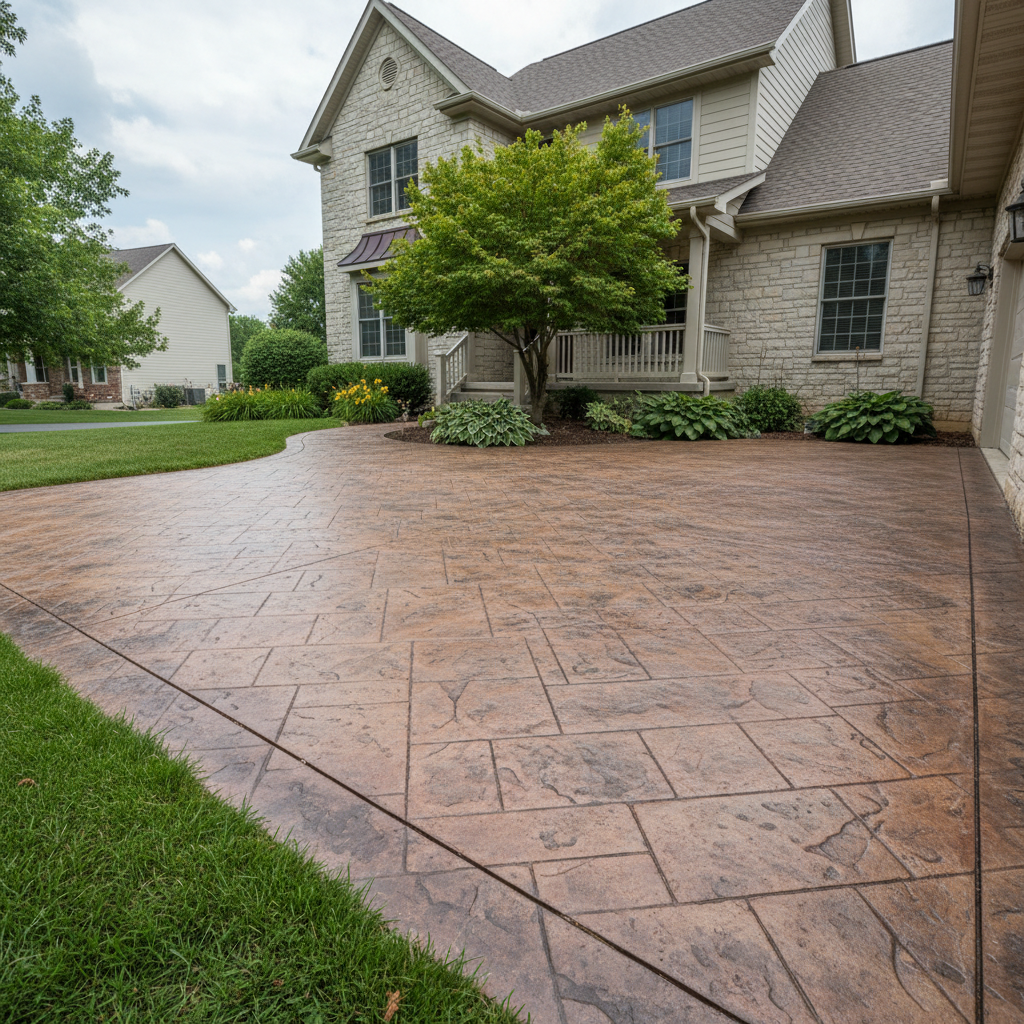
So, you've got this gorgeous stamped concrete patio, driveway, or walkway. It looks fantastic, right? You picked the pattern, the color, and now it’s a real showstopper. But here’s the deal: even the toughest concrete needs a little love to stay looking sharp, especially with what our weather throws at us here in Lawrence.
I've seen a lot of stamped concrete over the years. Some looks brand new after a decade, and some fades and chips way too soon. The difference? Usually, it comes down to basic maintenance. It's not rocket science, no, but ignoring it will definitely cost you in the long run.
Extending Your Stamped Concrete's Life: The Long Game
Think of your stamped concrete like a good car. You wouldn't buy a new truck and never change the oil, would you? Same principle here. The biggest thing you can do to extend its life is proper sealing. When we install stamped concrete, we always put down a high-quality sealer. This isn't just for looks; it's a protective barrier, pure and simple.
That sealer wears down over time, especially in high-traffic areas or spots constantly hit by sun and rain. Here in Lawrence, we get those harsh freeze-thaw cycles in winter and scorching summers. That's brutal on concrete. You should plan on resealing your stamped concrete every 2-3 years. Sometimes it's every year if it's a super high-traffic area, like a commercial entrance, or if sprinklers or chemicals are blasting it. A good sealer protects against moisture, stains, and UV damage. That means less fading and less cracking from water expanding when it freezes.
Another big one is keeping heavy loads off it if you can. Concrete is strong, sure, but constant heavy vehicle traffic on a patio designed for foot traffic can cause issues over time. If you've got a stamped driveway, make sure it was poured to handle vehicle weight, not just for decorative purposes. We always make sure to use the right thickness and rebar for driveways at Spectrum Concrete Solutions.
Your Regular Maintenance Checklist
This isn't a daily chore list, don't worry. Most of this is pretty simple stuff.
- Keep it Clean: Sweep off leaves, dirt, and debris regularly. If stuff sits on the surface, it can break down the sealer or cause stains. For general cleaning, a hose and a mild detergent (like dish soap) with a soft brush or mop usually does the trick. Rinse it thoroughly afterwards.
- Watch for Stains: If you spill something like oil, grease, or even a drink, clean it up quickly. The longer it sits, the harder it is to remove, and it can soak into the sealer. For tougher stains, specific concrete cleaners are available, but always test them in an inconspicuous spot first. You want to make sure they don't damage the sealer or color.
- Avoid Harsh Chemicals: This is a big one, especially in winter. Don't use rock salt or de-icers containing ammonium sulfate or ammonium nitrate on your stamped concrete. These can eat away at the sealer and even the concrete itself, causing pitting and spalling. Stick to sand for traction or de-icers specifically labeled as concrete-safe. Shovel snow promptly to reduce the need for de-icers.
- Pressure Washing: You can pressure wash, but be careful. Use a wide-angle nozzle (like a 25-degree or 40-degree tip) and keep the wand moving. Don't get too close or use too high a pressure, especially if your sealer is older or worn. You can actually blast the sealer right off or damage the surface. Think of it as a gentle wash, not an industrial cleaning.
Warning Signs: When Something's Not Right
Your concrete will usually tell you when it needs attention. Keep an eye out for these:
- Fading Color: If your vibrant color starts looking dull or washed out, especially in high-sun areas, your sealer is probably wearing thin. This is a clear sign it's time to reseal.
- Surface Flaking or Pitting (Spalling): This looks like small pieces of the concrete surface are breaking away or you see little divots. This often happens when water gets into the concrete and freezes, expanding and popping off the surface. It means your sealer isn't doing its job, or wasn't applied correctly in the first place.
- Cracks: Hairline cracks are pretty common in concrete; it's a natural characteristic of the material. But if you see cracks that are widening, becoming uneven, or running through the middle of a pattern, that's a bigger concern.
- White, Chalky Residue (Efflorescence): This is a powdery deposit that can appear on the surface. It's mineral salts migrating from within the concrete and evaporating on the surface. It's usually harmless but can be unsightly. It often indicates moisture is moving through the concrete.
- Slippery Surface: If your sealed concrete becomes excessively slippery when wet, it might be due to a build-up of old sealer, or a type of sealer that wasn't appropriate for the application. Sometimes, a non-slip additive can be mixed into the sealer.
When to Call a Professional (Like Us!)
For most routine cleaning and even resealing, many homeowners can handle it themselves. But there are times when you really should bring in the pros:
- Major Cracks or Uneven Slabs: If you've got significant cracks, especially if they're causing trip hazards, or if parts of your concrete are sinking or lifting, you need a professional assessment. This could point to underlying soil issues, like the expansive clay soils we often deal with around here in Lawrence, or improper base preparation. We can often repair or even lift settled sections.
- Extensive Spalling or Pitting: If a large area of your concrete is flaking or pitting, it's beyond a simple reseal. We can sometimes resurface or repair these areas, but it takes specialized knowledge and materials.
- Stubborn Stains You Can't Remove: Some stains are just too deep or too tough for DIY methods. We have industrial-grade cleaners and techniques that can often remove what household products can't.
- When You're Unsure About Resealing: If you're not confident about what type of sealer to use, how to apply it, or if your concrete needs more than just a fresh coat, give us a call. Applying the wrong sealer or applying it incorrectly can actually make things worse. We'll assess your concrete and recommend the best approach.
- If You Want to Change the Look: Maybe you want to refresh the color or add a different finish. That's definitely a job for experienced concrete contractors.
Look, your stamped concrete is an investment. Taking care of it means it'll keep adding curb appeal and value to your home for many years. Don't let those Kansas winters or hot summers get the best of it. A little proactive maintenance goes a long way, and when you need a hand with the bigger stuff, Spectrum Concrete Solutions is always here to help.